Ethiopia enters the race

Amidst the Olympic fever gripping London is the arrival of team Ethiopia, here to compete across a variety of events and  going for Gold!

Team Ethiopia at the opening ceremony

Team Ethiopia will be competing in the Men’s 400m, Women’s 800m and both 1,500m amongst other swimming and racing events.

You can catch Roba Gari, Berhanu Getahun and Nahom Mesfin in the first round of the Men’s 3000m Steeplechase on Friday at 13:00.

Bereket Desta competes in the preliminary heats of the  Mens 400m on Saturday 4th August at 10:oo while on Sunday 5th August , Asselefech Mergia and Mare Dibaba will be competing in the Women’s marathon!

Tiki Geana will be going for Gold

 The Kindu Trust proudly supports team Ethiopia and wishes them the best of luck in all their events!!

Visit to Fasiledes Castle

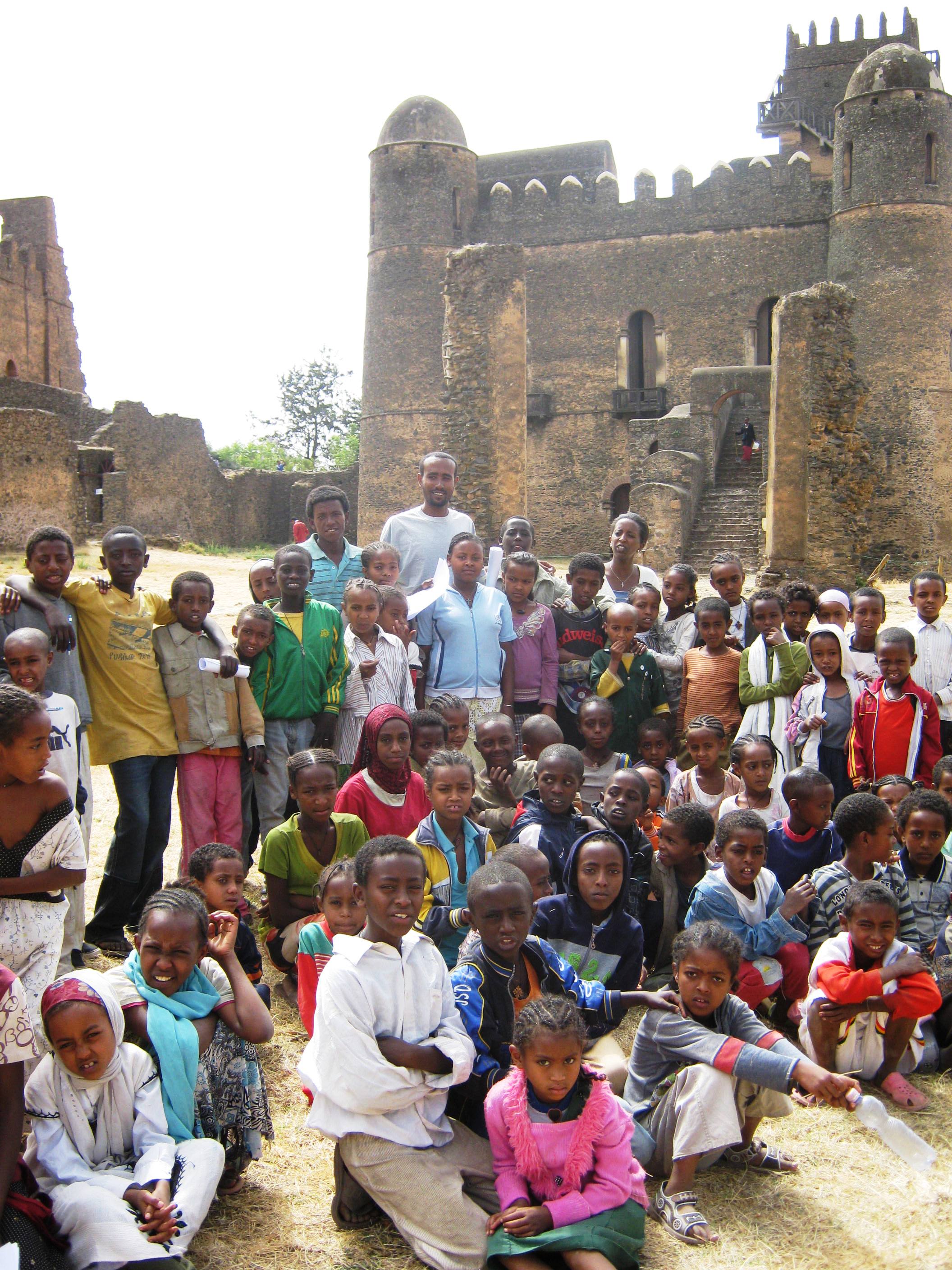
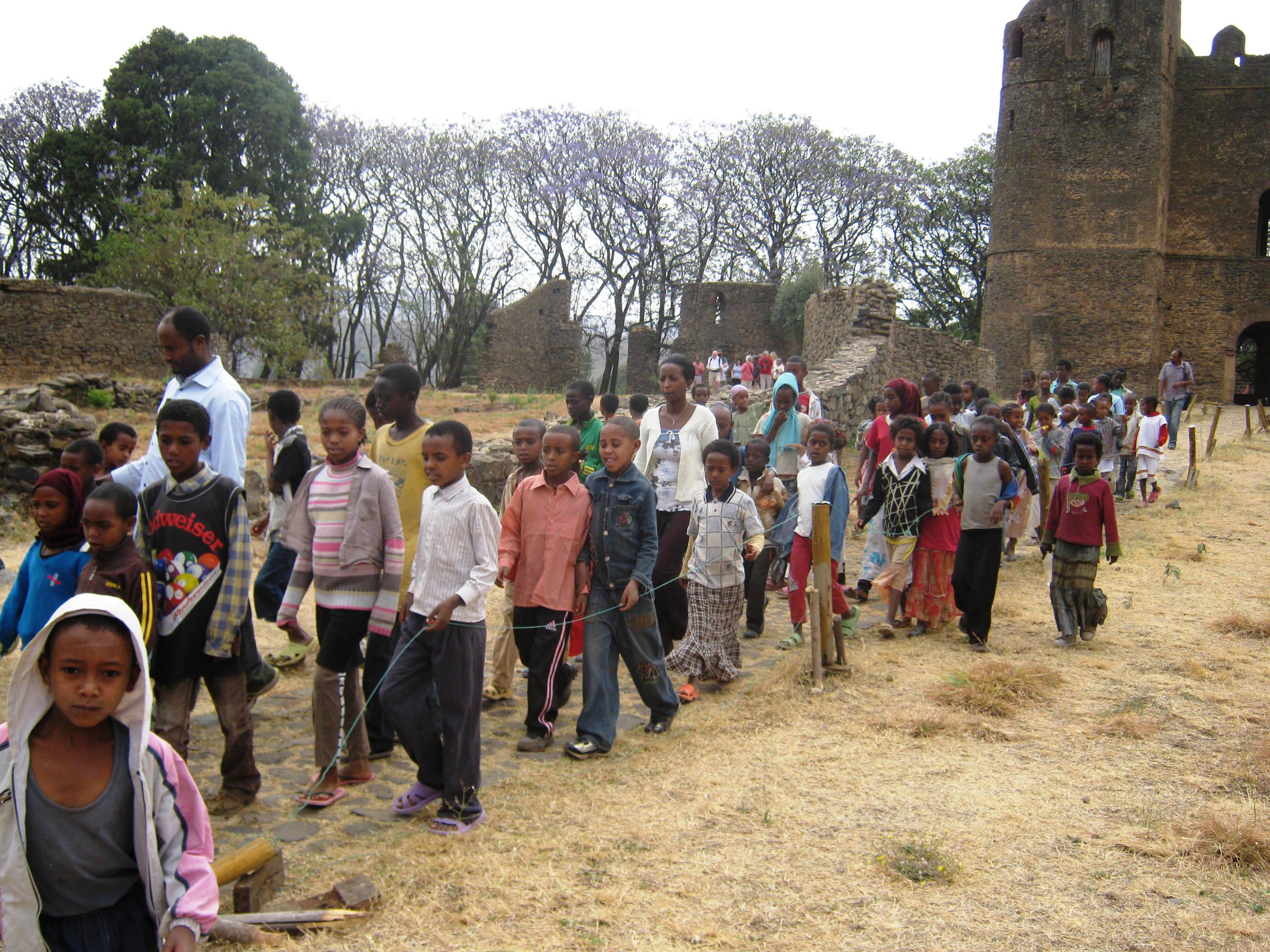
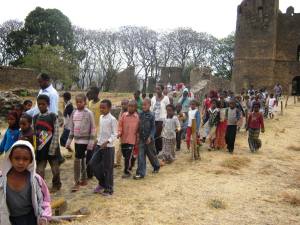
In March 2012, Selamawit – the Youth Worker who runs the Kindu Klub youth group in Gondar – organized an outing to the Gondar Castles for 76 of our sponsored children.

The kids met at The Kindu Trust’s offices early on a Saturday morning and walked  1.5 km to the Royal Enclosure (a world heritage site), where they were given a guided tour around the castles.

There are a number of different castles within the Royal Enclosure, the oldest was built by Emperor Fasiledes in the 1640s when he established Gondar as his capital.

Subsequent castles were built by his descendants. The Royal Enclosure also contains several Churches, the remains of a bathing pavilion and cages that were designed to contain lions and tigers.

After the tour, the children were given biscuits and drinks before going home. The Kindu Trust is proud to be able to offer the opportunity for our beneficiaries to discover the historic treasures of the country in which they live.

Here are two accounts of the trip from our sponsored children

BY HELEN FEKADU

We all met in The Kindu Trust Compound on the time we were told to appear. We were counted by Tadele and the total number of beneficiary students was identified. Then, he gave us information what we have to do in every walks of the visiting like taking the right way  and not walking across roads unless we are told to do so. All the children were acting accordingly. It was really very attractive walk to the castle. It was through the foot ball field we pass through. We have also seen children who played foot ball in the field and we were very happy seeing children in the foot ball field playing foot ball.

Finally, we arrived near the gate of the castle where we have seen very green grass which is very lovely. Fortunately, some children diverted their attention towards the opposite direction looking pigs which were appealing with white colour which are 4 in number and passing through the road near to the castle compound. When we enter to the compound we have seen persons who were building a house may be it will be used for ticket office.  There were both sexes (male and female) who participated in the work which is very interesting seeing both sexes working equally.

A guide came and gave us a warmly greeting and started telling us about the Castle. He was begun by saying that the area of the compound has 70,000 square meters. It was built in 1632. It has 12 entrances. Some of them named:

ü  Enkoye Ber– a gateway which is used for the entrance and exit of beautiful woman.

ü  Ergeb Ber-  a gateway which is used for the entrance and exit of humble persons

There were six kings who had a crown in this compound. The first king was Atse Fasiledes and his children and great children.

  1. The Castle of Alemseged Fasile Building (1632-1667). There is a room which was used as a sit of the king in this building. It has window which was used to give greeting for the king whenever somebody pass through around by putting off their cape. This room was constructed by the order of the son of Fasiledes named Atse Yohannes.

Then, we went to a building which was used to rehearse and present song. The guide told us that it was a room where both traditional music and religious songs were presented. The building was made by Atse Eyasu, garnd son of Atse Fasiledes.

The visit was completed by looking the palace of Queen Tewabech who used the building to train women different skills like spinning cotton manually.  We also told that there is building used as store of documents and other necessary materials.

Finnally, the visit was concluded having a photograph together and eating cookies prepared by The Kindu Trust.

I very thank you for The Kindu Trust and coordinators who organize and facilitate this visit. We learn a lot which will be important for our future life.

BY KALKIDAN BIZUAYEHU

It was early in the morning that we all the Kindu Club students appeared in The Kindu Trust Office. In the tour, all the participant children were behaving very well chatting friendly and cordially. Anyone can read happiness from the students face. We went through the mini-football stadium that the Kindu club children use to play foot ball every Friday and we have seen some children who were playing foot ball.

When we close to the gate of the Castle, we have seen foreign tourist who were on the way to enter to the castle compound to visit. Moreover, in the gate of the castle there is quotation written on its fence which says “ Let us Keep the Ancient Heritages” which has an implication that every one of us are responsible to keep and pass over the ancient legacies to the coming generations. We were also lucky to see very beautiful trees which seem long in age. The other special event that we saw 4 pigs in the road near to the castle which are white in colour which was the first time for most of us. The pigs look neat which shows they have been kept properly by the owners.

Then, the coordinators advise us not to talk much instead to follow everything attentively and entered in to the castle compound. We all told to take rest under the tree and some introduction about the history of the compound was given by the guide in the compound with some orientation. From the guide explanation we have learned that the castle has area coverage of 70,000 square meters.

The places were built in the 17th century. The materials used to build these palaces are black stone and limestone, which was buried for three years to make it sticky.

What greatly amazing me is the method they were used to collect water in a water tank which has high deep height in the ground. They were used this water in dry season collecting in the rain season. There is also a tube used to bring water when its volume decreases which looks like what is being used today.

We moved to the next building named Atse Eyasu Palace. The guide explained that it was bonded by Gold.  There is a bridge called ‘Kob Astel’ in the outside which was used to go to the nearby church. The bridge name was given to show that ordinary people were giving respect by put off their capes whenever they pass through that way.  There is a hall which was used as meeting space for different political and religious affairs.

There is another building which was used for lion’s home. In these rooms, the female and the male lions were living separately. There is a door which was opened to make relationship between the male and the female. These lions were manifestations of hero for the kings. .

The guide also has shown us in a near distance a building which was used as a palace by Queen Mintwab. We were not able to enter this palace as there are materials inside. According to the guide, as she was very good in preparing food and spinning cotton manually, she used that building as a training centre for women to make them skilful and as good as she did. The queen was telling the trainee to train others after they completed their trainings.

I want to remind you is that the coordinators particularly Tadele was running here and there to pick photographs in each steps of the visit. Other coordinators Selamawit and Abraham were glancing and caring all the children. Moreover, the guide was encouraging the children to ask any question which were not clear to them in every explanation and some children were asking question.

Oh, it is very astonishing which I have never seen in my life.  The castle of Fasiledes, which is very amazing and beautiful. All foreigners and local people are running to visit this amazing and incredible ancient castle. It is very very incredible and lovely, indeed,.

 At the end of the visiting, we were invited cookies and advice was given to go together with those who are in the same village.

We, the 21st children have to learn that we have to keep this incredible castle properly and pass to the next generation and we have to work hard to create new history to make Gondar popular again.
 

In the future we are hoping to purchase a minibus which will enable us to explore further afield, into the Simian Mountains, Lake Tana and perhaps even Axum.
The Millennium Development Goals and The Kindu Trust

The Millennium Development goals (MDGs) were a noble set of aims produced at the Millennium summit in New York in 2000. These goals set forth a strategy to bring better living conditions and prospects to millions of people around the world. The MDGs are

MDG 1: To eradicate extreme hunger
MDG 2: To achieve universal primary education
MDG3:  To promote gender inequality and empower women
MDG 4: To reduce the child mortality rate
MDG 5: To improve maternal health
MDG6: To HIV/AIDS and other diseases
MDG 7: To ensure environmental sustainability
MDG 8: To develop a global partnership for development

Each goal has a set of sub-targets and tools to measure success, for more information see the UN Millennium page here.

The work that The Kindu Trust carries out in Ethiopia falls in line with at least five of these universal goals.

MDG 1: The Kindu Trust through its direct financial payment service supports families living in poverty, helping them to buy food and fuel. We support over 200 families through our service and work to narrow the poverty gap that exists within Ethiopia through vocational training courses and income generating projects.

MDG2: The Kindu Trust provides much needed educational support services to our sponsored children. Although education is free in Ethiopia, materials such as pens, books, uniforms and note pads are not. These costs can cripple family budgets and result in a child not attending school. The Kindu Trust covers all these costs and provides extra curricula lessons outside of school in our Kindu Klub. We set out to support our sponsored children all the way through the education system to university.

MDG 3: Development cannot progress without full equality and participation of women. The Kindu Trust actively supports female relatives of our sponsored families, seeking to find them employment or vocational training wherever we can. The Injeera project that The Kindu Trust has helped launch is a proud achievementthat reflects this aim.

MDG 6: The Kindu Trust runs a fortnightly Coffee Morning for HIV+ ladies. The women attending have discovered a mutual support network, where they can chat and gossip without feeling stigmatised. In a society which continues to shun those infected with HIV, making friends has historically been very difficult for these ladies. The coffee morning provides them with the opportunity to feel normal again. Alongside the health counselling they receive, this support makes a big difference to both the physical and mental well being of the HIV+ ladies.

MDG 7: The Kindu Trusts strives to put environmental sustainability at the heart of its operations. Our jewellery project is prime example of how we have integrated an income generating project with environmental sustainability. 


These may be large aims and we may be a small organisations but the work we carry out has an even bigger impact. The Kindu Trust supports over 200 families across Ethiopia making sure they have the educational, financial and health support they need.


Ethiopian Commodity Exchange

Rural farmers throughout Africa have to navigate not only the precarious changes in the weather but also the changes in the markets. Up until now rural farmers have not been integrated into national markets let alone international ones. Farmers would travel to market and sell their goods for a generally agreed price made between them and local merchants, often farmers only traded with a handful of people as to avoid risk of being cheated or the buyers defaulting.

Farmers would not have access to national or international market prices and so would often be selling their goods and a deflated rate. In Ethiopia where rural farmers make up about 95% of the country’s agricultural output this problem was compounded by poor distribution networks and a lack of quality control for goods. But now the new Ethiopian Commodity Exchange is bringing real change to the sector.

Headed up by former World Bank economist and fellow Ethiopian Gabre-Madhinthe exchange is providing accessible real time market information to rural farmers. This allows farmers to sell theirs good at a much more competitive price thus squeezing the profit margins of national and international commodity traders.

As well as providing information to Ethiopian farmers the Exchange has also put in place a groundwork of rules for trading, warehouse storage, payments, delivery and  a dispute settling mechanism. These structures are designed to encourage greater trust and transparency within the market and thus greater rates of exchange and trade.

Combine all this with a new quality grading system and there is now a real incentive for farmers to boost their productivity which in turn will help alleviate food shortages in other areas of Ethiopia.

If you want more information watch this video by BBC

http://www.bbc.co.uk/news/business-11346643

THE 10k CHALLENGE

The Kindu Trust has a booked a place at the 10K Challenge run in Derbyshire for the 30th June 2012! Organised by the Foundation for Social Improvement the Challenge 10k is entering its fifth year and The Kindu Trust is proud to be a part of it.

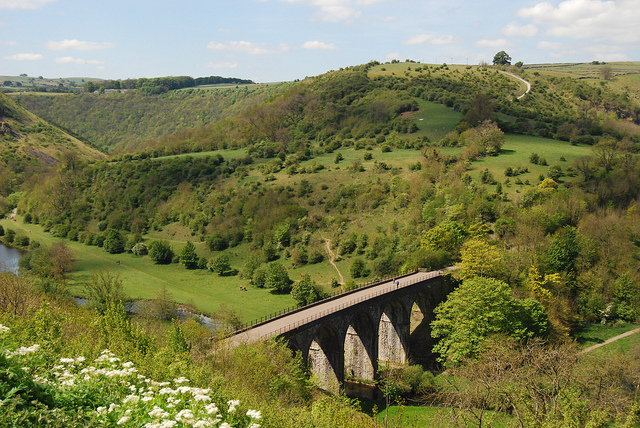
This wonderful event is a chance to mix fundraising for a good cause with family fun, camping and great food!  The run takes participants through some of the most beautiful parts of the Peak District and finishes on the magnificent lawn of Thornbridge Hall.

Lawn of Thronbridge Hall

To top it off, this year the FSI is offering all those involved the opportunity to camp at the event on the Saturday evening followed by a glorious garden party on the Sunday afternoon complete with stalls and barbeque. All in all a great weekend.

The Monsal Trail

There is a 10k option or a 4k option and the run is open to anyone, so whether you want to walk it, run it or crawl it, do it for The Kindu Trust.

For more information please visit the Challenge website http://www.smallcharitychallenge.org/

To apply download the application pack and send to kindu@kindutrust.org

Click here to download the sponsorship form so you can start right away

Challenge-2012-Sponsorship-form-template

Easter treats!

Easter, or Fasika in Amharic, is the central feast in the Ethiopian Orthodox calendar; it has more importance attached to it than Christmas.  After observing fifty-six days of lent Easter is celebrated across the Christian community with a meal. The Kindu Trust would like to ensure that our beneficiaries can celebrate this religious festival as it was meant to be celebrated and so we are launching our ‘Easter Treat’ campaign. Help us to send an egg to every one of our beneficiaries and their immediate families (over 2000 people) for Fasika. This egg is will given on Easter day and will signify the end of lent. Eggs are a vital source of protein in a meat scarce diet.


As well as our egg gift The Kindu Trust also has an ‘Easter family meal’ available in its gift catalogue. It costs £15 pounds and will feed an Ethiopian family on Easter day. This meal consists of chicken, lentils, onions and injeera bread and will enjoyed by the whole family on this special day.

If you would like to donate to the ‘Easter Gift Campaign’ then please visit our fundraising page and click on the ‘Easter Gift campaign’ button. £5 pounds will be enough to gift eggs to approximately ten families! Our fundraising total is £150 – £200. Any egg-cess money donated will be spent on providing hot nutritious meals for the members of the Kindu playgroup!

If you would like to gift an Ethiopian community an Easter meal then visit our gift catalogue here.

If you do not want to order for either of these online then please don’t hesitate to send a cheque to the office at
The Kindu Trust
Peel Centre
Percy Circus
WC1X 9EY

Help us make this an eggs-elent Easter for all our beneficiaries!

Tour Ethiopia with Link

Link Ethiopia – A charity that we work very closely with to alleviate poverty and to support children is running a tour package to Ethiopia.
This tour lasts twelve days and encompasses visits to the Simien Mountains, the world famous holy site of Lalibela, Tississat falls, Addis Ababa (including Mercato, the largest open air market in Africa!). The tour also makes its way through Gonder and more specifically to the Kindu compound where travellers can rest their weary feet and enjoy a traditional Ethiopian lunch!

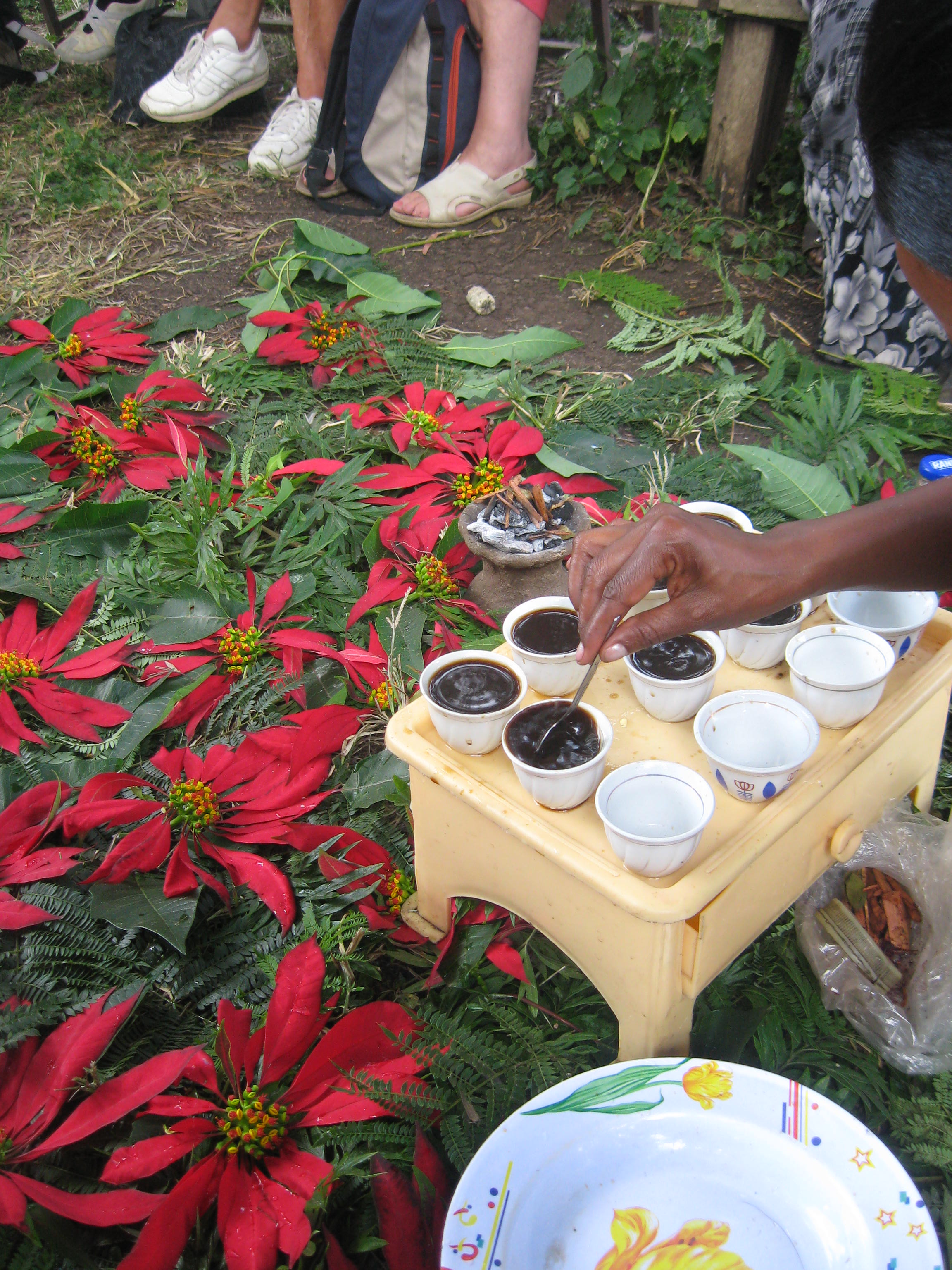
Traditional Coffee Ceremony

The tour offers:

  • Expert guides, accompanied throughout by Chris Grant -Link Ethiopia’s Director and the friendly local staff
  • Intimately small groups – Group are no larger than eight people
  • Completely Non-profit – Part of the overall cost is a generous donation to Link Ethiopia which will be invested back into supporting children
  • Unrivalled experience – Link Ethiopia have been working in Ethiopia for over sixteen years


This a really unique opportunity to experience the rich history and culture of Ethiopia guided by local knowledge. For more information please email Chris Grant at chris@linkethiopia.org 

Samuel Hodgson

The Kindu Trust has some exciting news!

Samuel Hodgson, who has worked with the the Kindu Trust in Ethiopia, has released his latest EP, with all proceeds being donated to The Kindu Trust.

His CDs are packaged in recycled cardboard and are available here http://www.mycharitypage.com/Samh. The EP is £4 for the songs and £6 for exclusive video and picture content. So grab one today to support a bright musician and The Kindu Trust.

Here is Sam’s latest work, for more music content follow the link

Sustainable Jewellery

There was a post on the blog not long ago( https://kindutrust.wordpress.com/2011/09/) in which we took you behind the scenes at our latest income generating project.
Well now the pieces of jewellery are on sale in our Gift Shop.

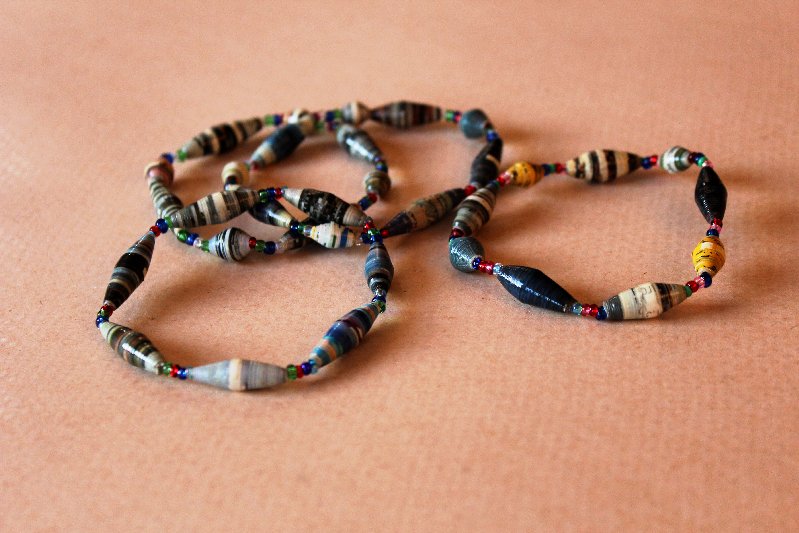
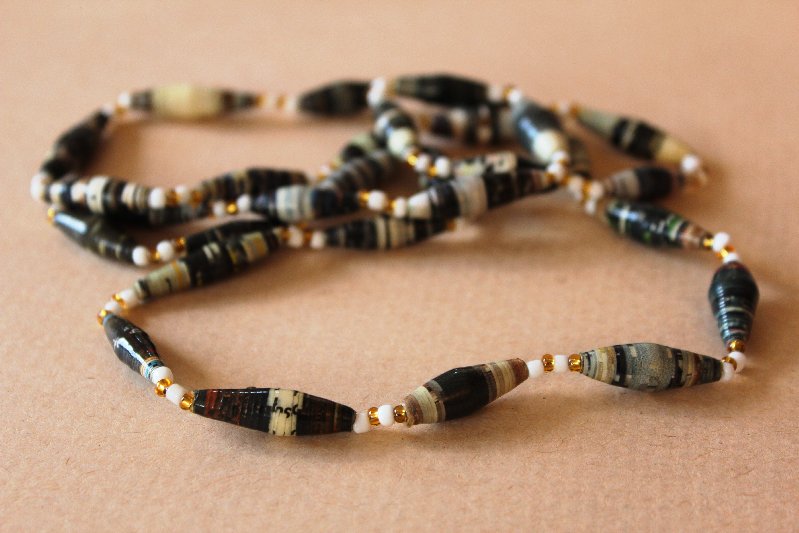
Hand crafted Bracelets

These beautiful pieces of jewellery are hand crafted in the Gonder area of northern Ethiopia by relatives of The Kindu Trust beneficiaries. Made from recycled glossy magazines these pieces are not only sustainable but also provide a vital source of income for people living in very hard conditions. The jewellery is the result of an innovative income generating scheme that is currently being run by The Kindu Trust.

This income generating project pays a base rate to the employees and also a commission from the profits of all sales. The remainder of the profits are invested into training programmes.

100% sustainable

These pieces make a perfect Christmas gift not  just for a loved one but also for the our workers in Ethiopia as the money spent is a gifting our female workers a real chance of economic empowerment

Roof repair

The Kindu Trust works to support disadvantaged  families and their children throughout the Gonder area.  The role of the charity is to help families carve out a sustainable future for themselves and their communities, however there are numerous challenges to this goal.  Lack of infrastructure, little employment opportunities and food insecurity are perhaps the most obvious challenges that The Kindu Trust works to alleviate.  But there are other problems that families face on a day to day basis that may in fact hinder progress in other areas of support; basic maintenance and sanitation are perfect examples of such problems.

The Kindu Trust provides families with 250bir a month, on average 74% of this is spent on food leaving little else to address other critical needs that the family may be facing. There is rarely, if ever, any surplus to save for the next month and so ongoing problems that may require a lump sum of money to solve are rarely addressed. However last month a sponsor of one of our families inquired as to whether there was anything extra she could do to help her beneficiaries in addition to the child sponsorship scheme.
Well, the team in Ethiopia quickly dispatched a sponsorship coordinator to meet the family and see what could be done to ease some of the day to day problems they encountered. The family regarded the state of the roof which was in urgent need of repair as their greatest concern.

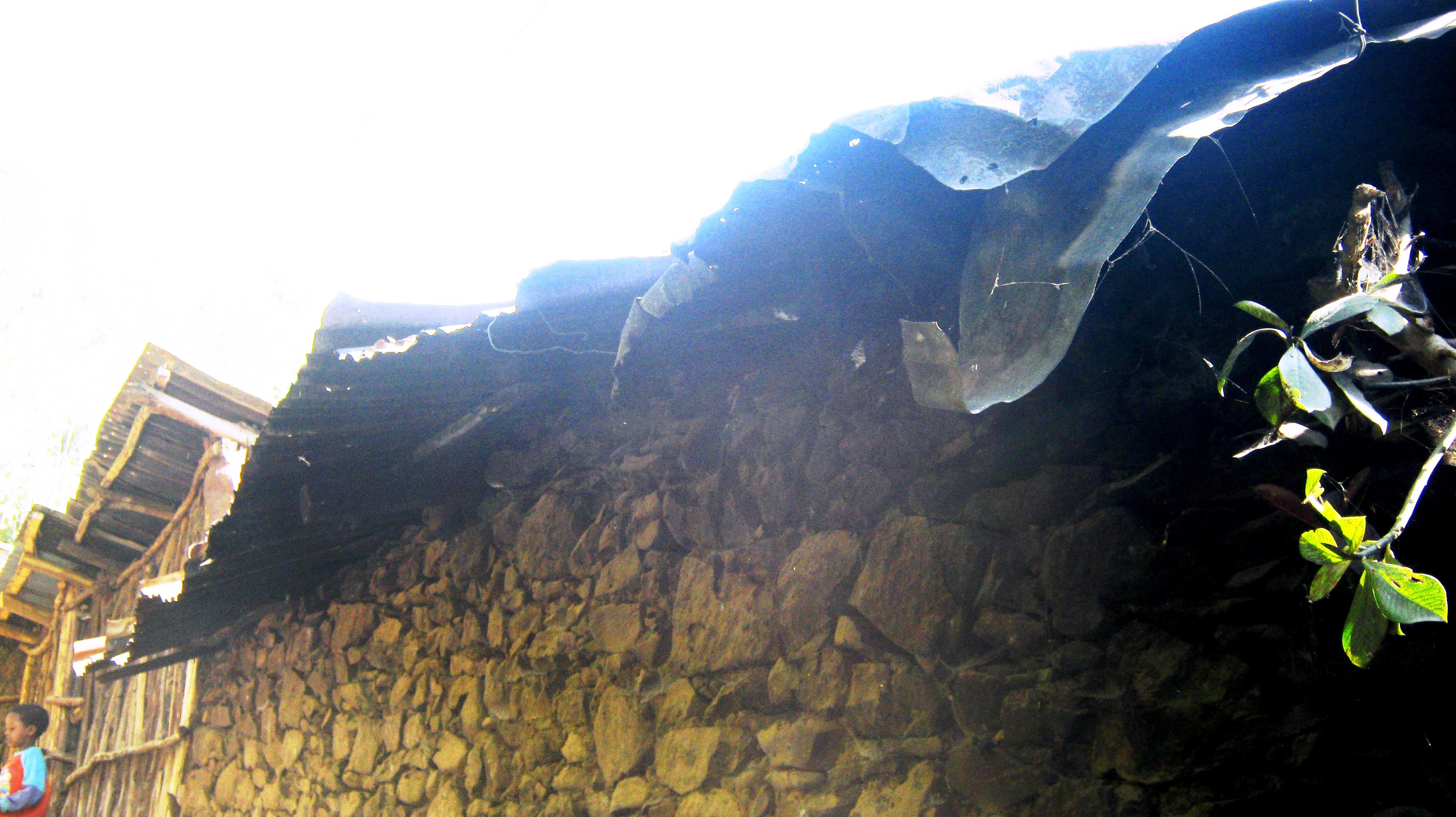
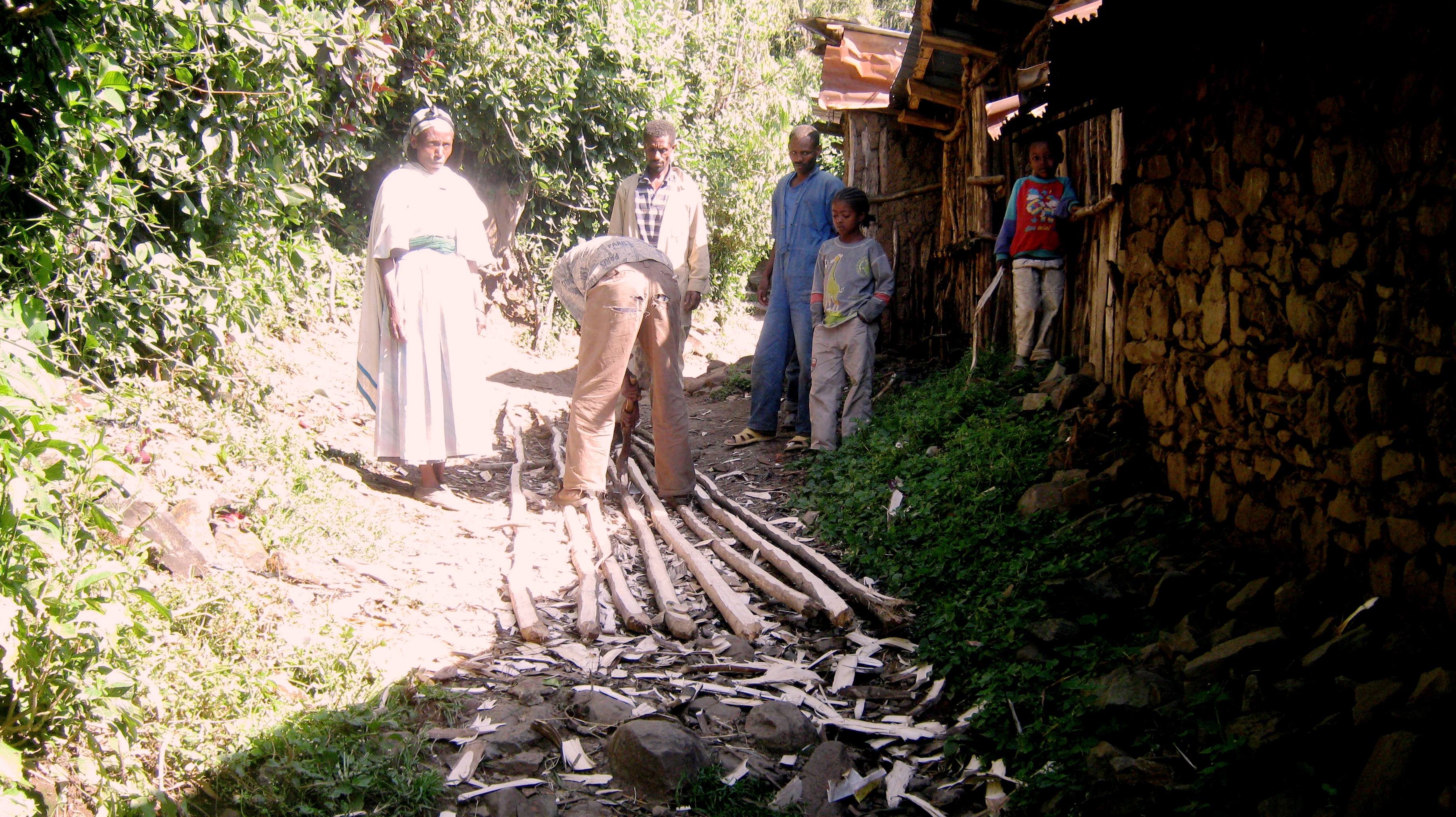
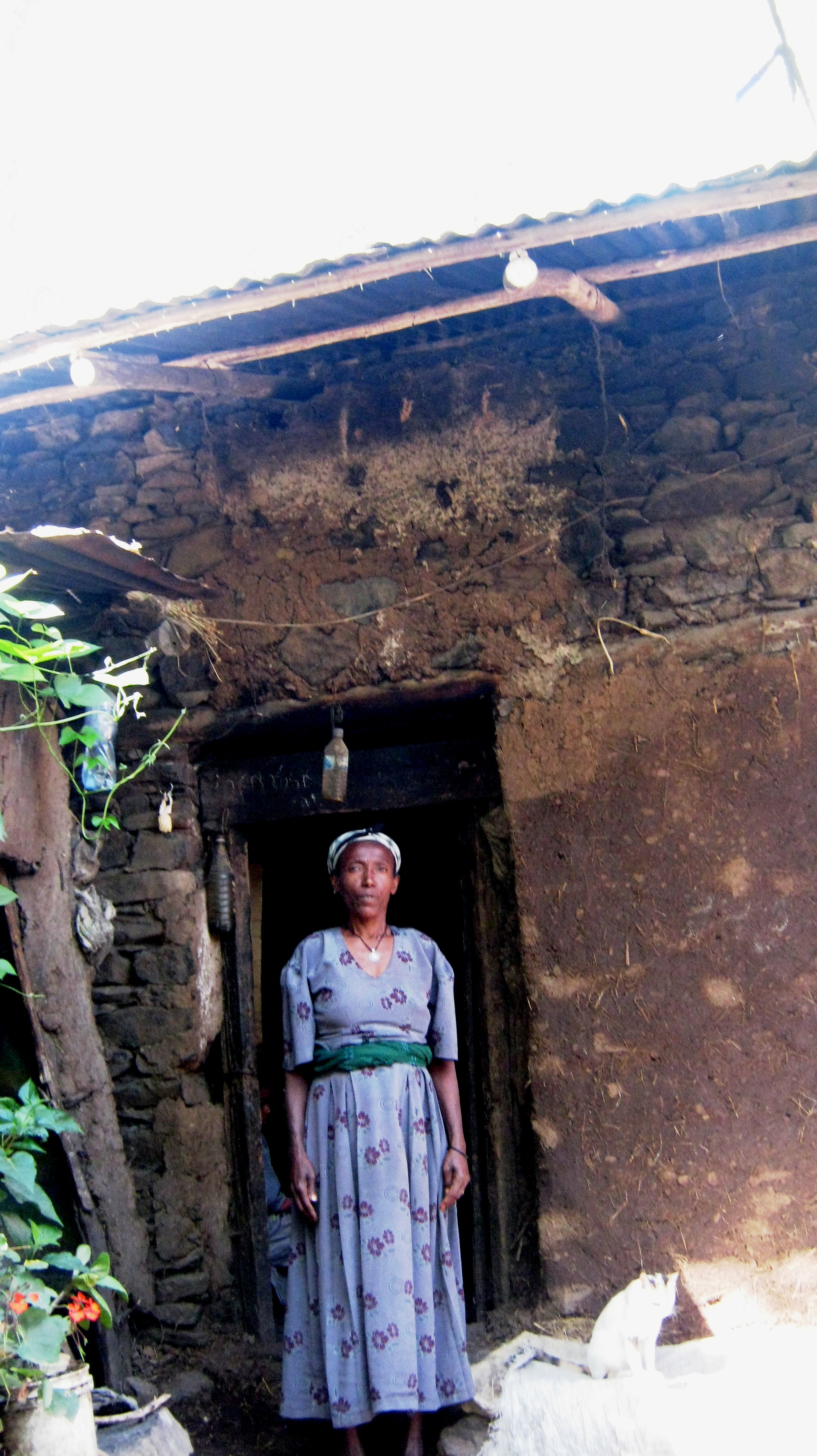
The message was relayed back to sponsor  as well as an estimate as to how much it would cost and the money was duly sent not long after.  The roof was repaired and waterproofed within the month! One of the long standing problems facing this families had been solved.  See the photos below to view the roof before, during and after repairs.

The leaky roof before repairs

At work on the new roof


If you would like to donate to a family in Ethiopia then visit our gift catalogue here  http://www.kindugifts.org/kindugifts/Home.html  there are plenty of vital items that will help to ease the lives of families living in some of the hardest conditions.

The new roof